

Product comparison
How Chozr makes comparing two products faster in the aisle
9 min read
Chozr is especially useful when two products look almost equally good. Instead of forcing you to compare every number by hand, it helps you get to the difference that actually matters for the selected profile.
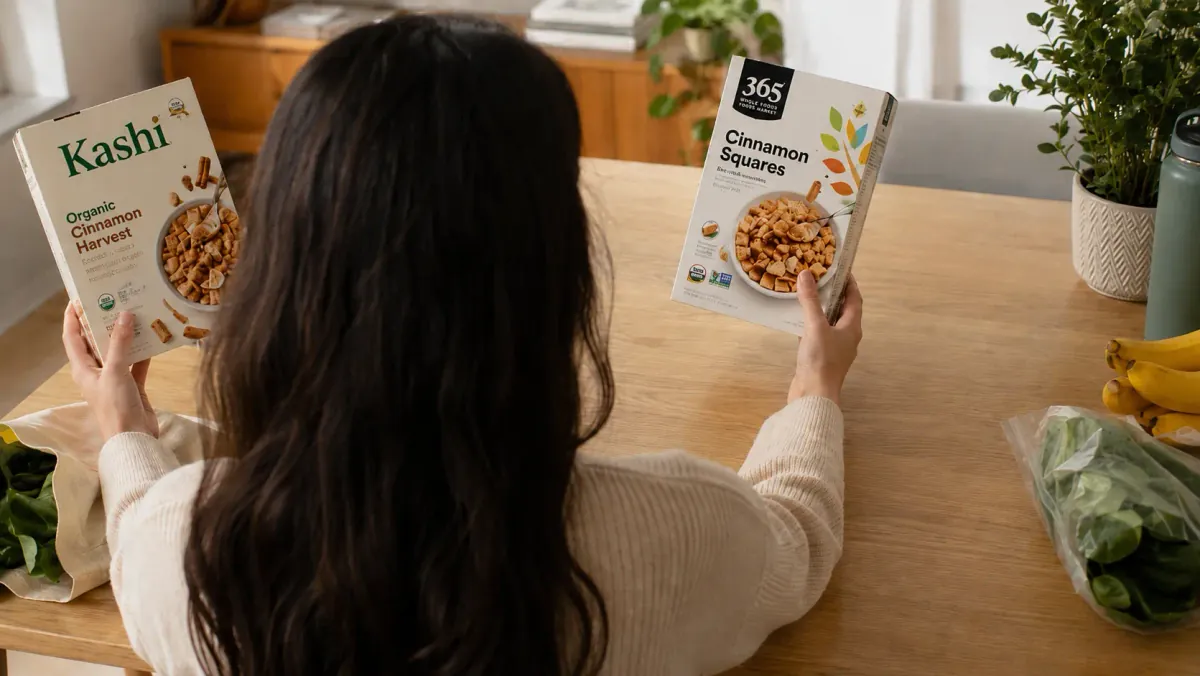
Comparison is where Chozr becomes immediately practical
A lot of apps can tell you something about one product. Chozr becomes much more compelling when you are deciding between two. That is the moment where information alone is not enough and real decision support starts to matter.
In a grocery aisle, speed matters. People are tired, distracted, and often shopping for a whole list of items. They do not want to stop and manually compare every nutrient, every ingredient line, and every packaging claim just to choose between two similar options.
That is why the comparison flow is such a strong feature. Chozr helps turn a shelf-level decision into something more manageable by putting the products into the same frame and grounding the result in a real profile, not a generic standard.
The value is not just that the app compares products. It is that it compares them in a way that is easier to act on in the middle of a trip. That makes the feature feel useful right away.
When a product experience saves time at the exact moment a user feels friction, it becomes memorable. That is one of the clearest reasons product comparison is one of Chozr’s strongest hooks.
Why Chozr is better than comparing labels manually
Manual comparison sounds simple until you try to do it quickly. You start with calories, then move to sugar, then protein, then ingredients, then serving sizes, and at some point the decision becomes more tiring than useful.
Chozr is better because it reduces that clutter. Instead of asking you to perform your own mini analysis on every pair of products, it helps focus the comparison on what is likely to change the decision for the selected person.
That matters because most real comparisons are close calls. You are not usually comparing something obviously good with something obviously bad. You are comparing two products that both look reasonable and trying to figure out which one is the better fit today.
This is where Chozr gives you an advantage over packaging, labels, and generic scores. It does not just surface data. It helps translate data into a decision that makes sense in context.
For users, that means less hesitation, less label fatigue, and a much clearer reason for why one option beats another in that moment.
Chozr comparison gets stronger because it is profile-aware
The comparison feature becomes much more valuable because it is connected to profiles. In Chozr, comparison is not just about which product looks better in general. It is about which product better fits the person you are currently shopping for.
That means the same pair of products can produce a different practical answer depending on the profile. One option may be better for lower sugar, another may be better for protein, and a third factor like a saved allergen or restriction can completely change which choice is acceptable.
This is one of the areas where Chozr feels clearly more sophisticated than a generic comparison tool. It respects the fact that “better” is contextual, and it makes that context visible instead of hiding it under a universal number.
That profile-awareness also makes the feature much more useful in family shopping. You can compare the same two items with a different person in mind and get a result that actually reflects the household reality.
For users, that creates a much stronger sense that the app is helping with a real decision instead of just presenting more information.
Why this feature makes Chozr easier to adopt and keep using
Comparison is one of the fastest ways for a user to feel the value of Chozr. The moment they see two options side by side and understand why one fits better, the app stops feeling theoretical and starts feeling practical.
That is important for product adoption. Features that save users time in repeated situations are much more likely to become habits than features that only look impressive in a demo.
The comparison flow also helps users trust the broader product promise. If Chozr can repeatedly help them make better aisle-level decisions, they are much more likely to believe in the value of its personalized scoring and family-aware logic as a whole.
Over time, that creates stickiness. Users come back because the app proves itself exactly when the decision is hard, not because it gives them more generic advice than they could get elsewhere.
That is what makes the feature strategically important. Product comparison is not just another tool inside Chozr. It is one of the clearest demonstrations of why using Chozr is better than relying on labels, guesswork, or a one-size-fits-all food app.